
The programme aims to build public interest narratives so that people and society can have a greater say over how and where AI technologies get adopted in Europe. It focuses on three areas – data centres, jobs and young people – which have strong salience among the public.
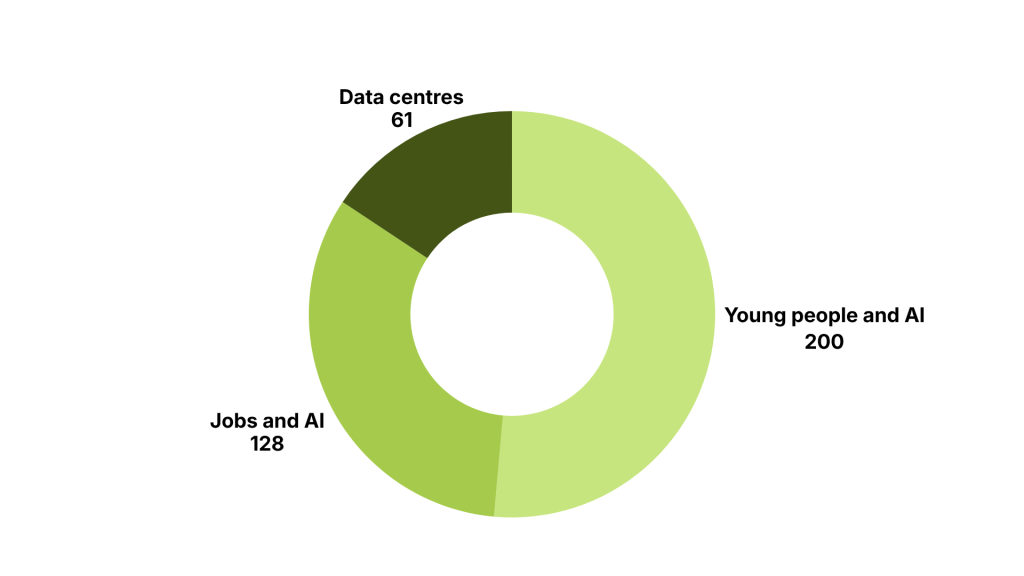
Over half the proposals were focused on youth, a third on jobs and the remainder on data centres. We have invited 21 projects to submit a full application, and final grant decisions will be made in December.
A common theme across the proposals was a desire for greater agency – whether over the building of data centres, the use of AI in education or how AI technologies were introduced in the workplace. Many hoped to use the funding and learning programme to shift a dynamic where too often AI is adopted without involving the people and communities affected.
But there were distinct differences across the themes in how ready applicants were to turn this ambition into a narrative change project. Data centres proposals were largely well able to identify the narratives they want to challenge and the audiences they wish to reach. Meanwhile applications on youth and jobs were often focused on questions such as community consultation and empowerment, which lie upstream from narratives work.
Data centre development is not inevitable, and communities need to be heard
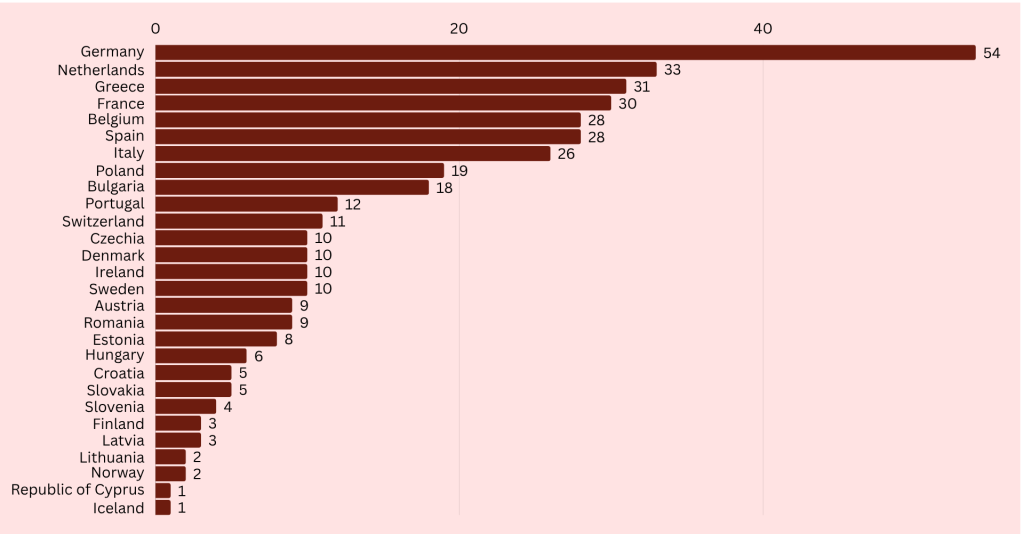
We received 61 applications on data centres with proposals clustered in countries where many data centres are under development, such as Germany, Poland and France.
Projects aimed to challenge the narrative that data centres are inevitable and recognise communities as legitimate stakeholders that should be part of decision making around data centres. There was good awareness of existing narratives such as the idea of an AI race and of innovation as an unstoppable force, that drives the data centre push. And the strongest proposals acknowledged both the risk of anti-data centre narratives that can backfire, as well as the potential co-opting of ‘green’ data centre narratives by industry.
The specific locations of data centre build-out – as well as concrete timelines around local decision making – meant that proposals were well able to articulate the audiences they wish to reach and the outcomes they want to achieve. The issue creates good opportunities for involving local communities and interest groups such as climate, labour and farming – many proposals were submitted by cross movement coalitions.
Young people want to have a say about how AI shapes their lives
The largest number of applications – 200 – proposed work around young people and AI, indicating the breadth of interest in this issue. They focused on empowering young people to determine the direction of AI, particularly challenging dominant narratives around tech inevitability, and the dominant discourse around protecting young people from AI and social media.
Nearly all the proposals aimed to help young people form their own views and take a real place in the conversation. But these were often vaguely framed and lacked a link from that ambition to a concrete audience or opportunity to deliver change. This indicates that while the appetite to build narrative power is high, the field will need to invest time and capacity in clarifying its own understanding and goals before it can achieve this. However, we found two issues with clearer potential for impact.
Firstly, the adoption of AI in education creates a very tangible opportunity to negotiate how AI is adopted, and to mobilise parents and teachers alongside young people. Secondly, we also saw strong proposals to increase young people’s power to shape the debate around restrictions and bans on access to technologies such as AI chatbots and social media. These focused on challenging Big Tech power and demanding that decision makers and regulators hold companies to account.
AI & jobs – not yet ripe for narratives work
We received 128 proposals on the intersection of AI and jobs, with most focused on moving from AI inevitability towards agency.
This theme had the fewest developed narrative change proposals, and very few applicants had a track record in narratives work. Many relied instead on existing advocacy and awareness-raising tactics, or on community building.
We read that as an honest signal about where the field is: many people affected by AI at work are still organising and working out their own language and are not yet ready to engage in narrative shifts. We were struck too by the limited participation of worker-led organisations. Because our programme is about building collective public power, this points to the need for stronger engagement with the actors who directly represent workers’ interests in any future effort at the intersection of AI and jobs.
Although there were some individually strong proposals, there was no common thread among them. Funding a small number of standalone projects across different geographies would have limited impact at this early stage of the field’s development. So we have chosen not to shortlist any projects focused on this theme.
We will continue to explore this area, as an important strand in public discourse around AI. Drawing on our findings from this call for proposals, we will consider where our intervention could be most helpful for growing the field. If you would like to be part of these conversations, please get in touch.